Why “Perfect Posture” Is a Myth (and What Actually Causes Pain)
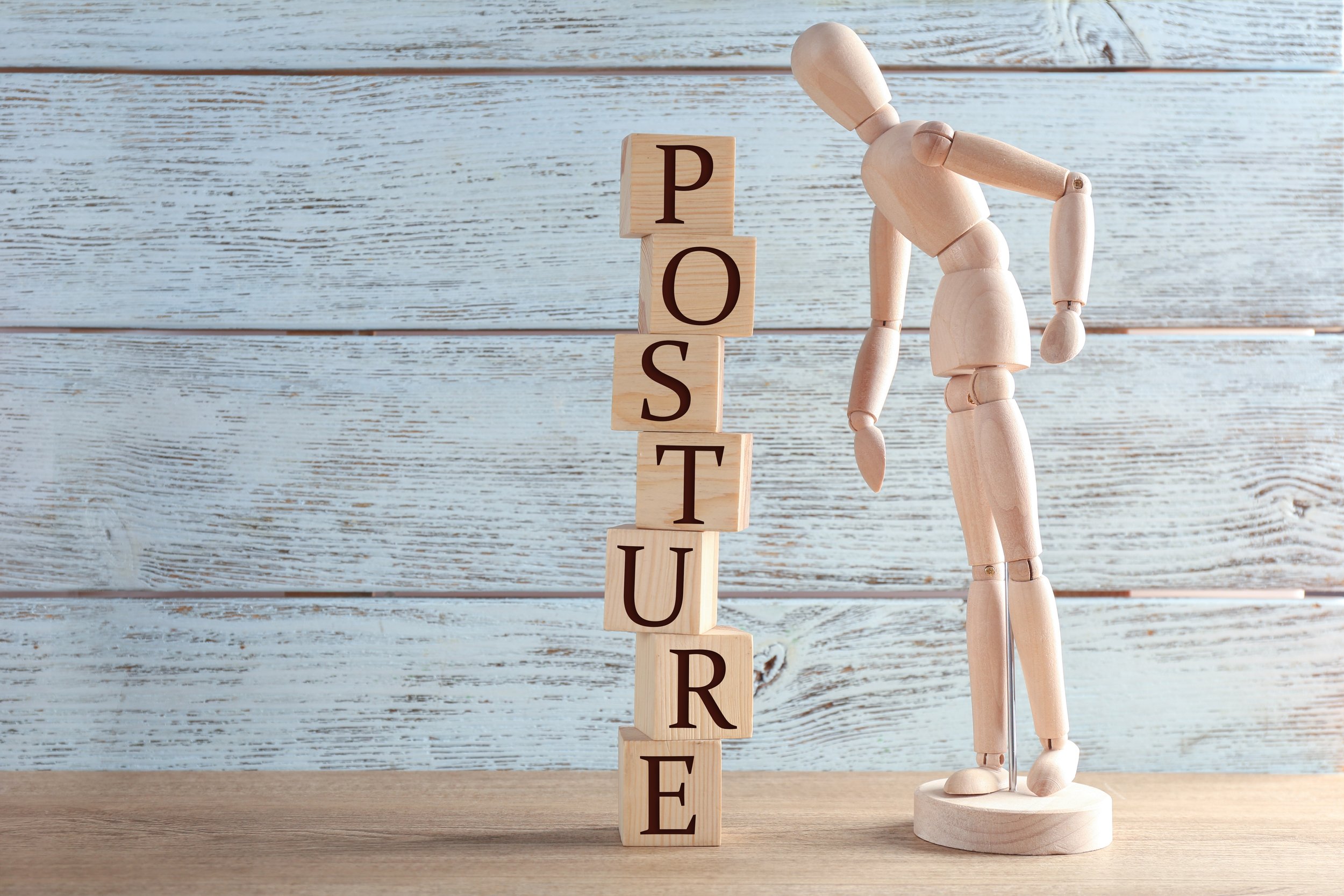
The idea of “perfect posture” is appealing—but it’s also misleading. From an anatomical standpoint, posture is often described as a clean vertical stack: head over trunk, hips over knees, knees over ankles. Everything aligned, everything balanced.
Sounds great on paper.
But humans aren’t designed to hold one position all day. We’re built to move. The real issue isn’t that you drift out of “perfect posture.”
It’s that your body loses the ability to move in and out of positions efficiently.
That’s where pain starts.
When movement patterns break down, whether from weakness, poor motor control, or repetitive positions, the body begins to compensate. Over time, those compensations create the stiffness, tension, and pain people blame on “bad posture.”
So instead of chasing perfect posture, we focus on restoring movement, strength, and control.
What’s Actually Happening in “Bad” Posture
That said, yes, there are common postural patterns that we see over and over again that can contribute to pain. Let’s break them down.
1. Thoracic Kyphosis (Rounded Upper Back)
Think of posture as your body constantly managing gravity. Ideally, gravity travels in a relatively efficient line (like a vector for those physics geeks) from the top of your head down through your spine, pelvis, and into your feet. With increased thoracic kyphosis (that rounded, stooped posture), that line shifts forward. Instead of hitting the top of your head, it now hits somewhere along the upper back.
Now your body has to work harder to keep you upright.
That increased demand falls on the spine and surrounding muscles, leading to:
Mid and upper back stiffness
Muscle fatigue
Chronic tension
Pain with prolonged sitting or standing
2. Forward Head Posture
Forward head posture rarely exists on its own. It usually shows up with thoracic rounding. Here’s the kicker: your body will always prioritize keeping your eyes level on the horizon. So when your head drifts forward, your body compensates by tipping it back.
If it didn’t… you’d be staring at the floor all day.
This creates excessive compression at the base of the skull and upper cervical spine, which can lead to:
Neck pain
Headaches
Tension at the base of the skull
Reduced neck mobility
3. Rounded Shoulders
This is the third piece of the trifecta. . . and it’s everywhere.
Rounded shoulders are typically associated with:
Shortened pectoral muscles
Weak scapular stabilizers
Limited shoulder mobility
Over time, this combination can alter shoulder mechanics and contribute to:
Rotator cuff irritation
Shoulder impingement
Bursitis
Frozen shoulder
Not exactly what you signed up for when you just wanted to “sit up straighter.”
What Actually Helps
Instead of forcing yourself into a rigid posture (which, let’s be honest, lasts about 30 seconds), we focus on restoring mobility, improving muscle balance, and retraining movement patterns.
Here are a few simple, effective ways to start:
Foam Roller Reset (Long Axis)
Place the foam roller parallel along your spine so it supports your head and sacrum.
In this position, you can work on:
360 breathing (relaxation + rib mobility)
Marching (deep core activation without compensation)
Snow angels (shoulder mobility and opening through the chest)
This position helps your body find a more efficient alignment without forcing it. You are allowing gravity to do most of the work.
Thoracic Mobility (Perpendicular Roll)
Place the foam roller perpendicular to your spine, with your hands supporting your head.
Gently roll up and down the upper back, pausing on areas that feel restricted.
When you find a tight spot:
Stay there
Perform small, controlled extensions over the roller
Let the movement come from your upper back, not your low back (make sure this is stabilized)
This helps restore mobility where most people are stiff (and compensating elsewhere because of it).
The Bigger Picture
Posture isn’t about holding yourself in one position. It’s about having the strength, mobility, and control to move well through many positions. If you’re constantly fighting your body to “sit up straight,” that’s usually a sign something deeper needs to be addressed.
When to Get Help
If you’re dealing with:
Persistent neck or back pain
Headaches related to posture
Shoulder stiffness or pain
A feeling like you “can’t get comfortable” no matter how you sit
It’s worth looking at how your body moves as a system.
At STRETCH Kinetics, we take a whole-body approach, because posture is never just about one area. It’s how everything is working together (or not).
Related Reading
FAQ
Is there such a thing as perfect posture?
Not really. The body is designed to move, not hold one fixed position. The ability to shift positions comfortably is more important than maintaining a rigid “perfect” posture.
Does bad posture cause pain?
Not directly, but poor movement patterns and prolonged positions can lead to muscle imbalance, joint stress, and pain over time.
How do I fix forward head posture?
You don’t “fix” it by pulling your head back. You address thoracic mobility, ribcage position, and deep neck and core control so the head can naturally stack better.
Are foam rollers actually helpful?
Yes, when used correctly. They can improve mobility, reduce stiffness, and help your body find better alignment, especially when paired with breathing and movement.